THINKING PATHWAYS
  • Home
  • Educational Resources
    • Thinking Routines >
      • Routines for Introducing & Exploring Ideas >
        • See Think Wonder
        • Think Puzzle Explore
        • Chalk Talk
        • Zoom In
        • 3 2 1 Bridge
        • Compass Points
        • The Explanation Game
        • Hot Spots
      • Routines for Synthesising & Organising Ideas >
        • Connect Extend Challenge
        • Colour Symbol Image
        • Headlines
        • I used to think...Now I Think
        • Generate Sort Connect Elaborate
        • The 4C's
        • The Microlab Protocol
        • E3
      • Routines for Digging Deeper into Ideas >
        • What Makes You Say That?
        • Circle of Viewpoints
        • Step Inside
        • Red Light Yellow Light
        • Claim Support Question
        • Tug-Of-War
        • Sentence Phrase Word
        • Peel The Fruit
        • Question Starts
        • Main Side Hidden
        • Layered Inference
      • Routines for Giving Feedback >
        • Give 3
        • Ladder of Feedback **NEW**
        • SAIL: Share Ask Ideas Learned **NEW**
      • Routines for Self Reflection >
        • Pause Points **NEW**
        • Success Criteria Strips **NEW**
        • Exit Ticket Questions
        • Traffic Light Reflection
        • Show of Thumbs Reflection
        • 3 2 1 Reflection
        • 4-Square Criterion Reflection
      • Routines for Engaging With Others **NEW** >
        • Give One Get One
        • +1
        • Think Talk Open Exchange
        • The Leaderless Discussion **NEW**
        • Making Meaning **NEW**
    • Cultures of Thinking >
      • Our Journey
      • Uncovering Student's Thinking
      • Building Understanding
      • 8 Cultural Forces >
        • Time
        • Routines
        • Language
        • Modeling
        • Opportunities
        • Interactions
        • Environment
        • Expectations
    • Inquiry-Based Learning >
      • Unpacking the Cycle of Inquiry **NEW**
      • The Art of Questioning **NEW**
      • Planning An Inqury Unit **NEW**
      • Genius Hour
    • Visible Learning >
      • Learning Intentions
      • Success Criteria
      • Feedback
      • 10 Mindframes for Visible Learning
    • Units of Work >
      • English >
        • Reading Resources >
          • Reading Conferences
          • Book Club
          • Visual Literacy
          • Book Review
        • Spelling Resources >
          • Spelling Through Inquiry
        • Grammar & Punctuation Resources
      • Mathematics >
        • Number & Algebra
        • Measurement & Geometry
        • Statistics & Probability
      • Science & Technology >
        • Earth and Space >
          • ES: Early Stage 1
          • ES: Stage 1
          • ES: Stage 2
          • ES: Stage 3
        • Material World >
          • MW: Stage 1
          • MW: Stage 2
          • MW: Stage 3
        • Living World >
          • LW: Early Stage 1
          • LW: Stage 1
          • LW: Stage 2
          • LW: Stage 3
        • Physical World >
          • PW: Stage Two
        • Digital Technologies >
          • DT: Stage 1
          • DT: Stage 2
          • DT: Stage 3
      • Geography >
        • S1: People and Places
        • S3: Factors That Shape Places
        • S3: A Diverse and Connected World
      • History >
        • The Australian Colonies
        • Australia As A Nation
      • Personal Development, Health & Physical Education >
        • PDHPE: YEAR 5
      • Other KLA's >
        • Creative Arts
        • ICT >
          • Google Apps For Education
  • Blog
  • SPEAKER
  • Podcasts
    • Teacher Takeaway Podcast
  • Books
    • The Thinking Classroom >
      • TTC Exclusive Content
    • The Learning Classroom >
      • TLC Exclusive Content
  • Shop
  • Courses
  • Contact
    • Acknowledgement of Sources

10 Mindframes for Visible Learning

10 Mindframes for Visible Learning has stemmed from the Visible Learning research conducted by Professor John Hattie and his team, who concluded that one of the most important influences on student achievement is how teacher think about learning and their own role. Hattie and Zierer (2018) define ten behaviours or mindframes that teachers need to adopt in order to maximise student success. These include:
  • thinking of and evaluating your own impact on students' learning
  • the importance of assessment and feedback for teachers
  • working collaboratively and the sense of community
  • the notion that learning needs to be challenging
  • engaging in dialogue and the correct balance between talking and listening
  • conveying the success criteria to learners
  • building positive relationships

Below you will find information about each of the 10 Mindframes for Visible Learning
Picture
Click to purchase from Booktopia
Picture
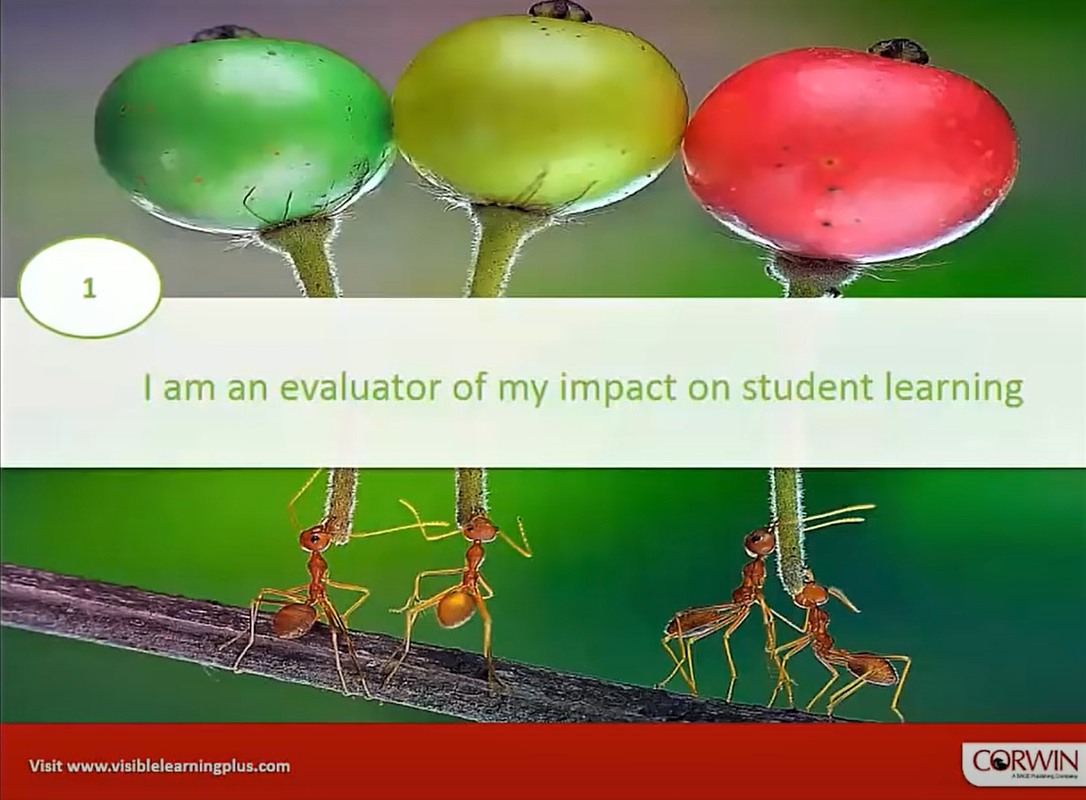
I am an evaluator of my impact on student learning
  • Visible learning and 'Know thy impact' are at the core of this mindset.
  • It often means stopping teacher talk and taking the time to truly listen to the impact.
  • Students are the major beneficiaries.
  • Continual adjustments and refinement of what we do to maximise impact for each student.
  • Use of different types of evaluation throughout the learning process. Formative evaluation during learning BENEFITS both the teacher and the students as teachers are able to make adjustments and apply intervention strategies. Summative evaluation BENEFITS only the teacher as they examine their impact of student learning and growth.
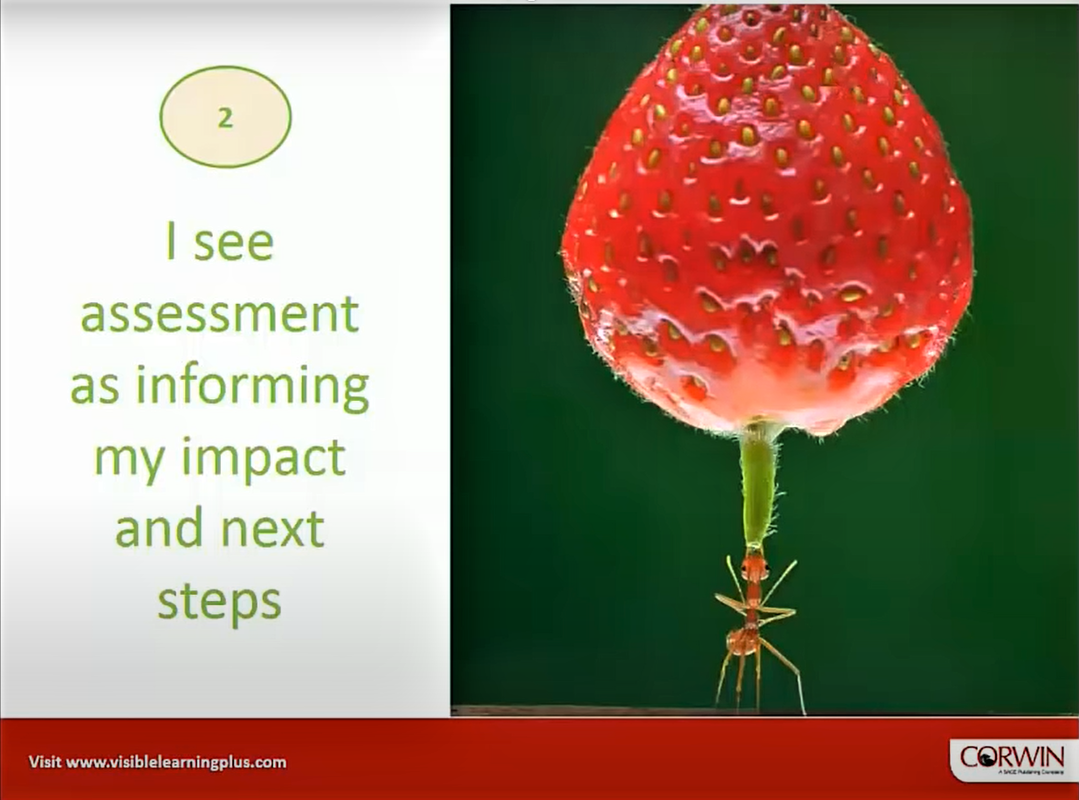
I see assessment as informing my impact and next steps
  • Student assessment not just important feedback for learners, but are even more useful to teachers as they work to examine whether the learning goals were achieved, content was understood, methods were appropriate and media helpful.
  • This mindframe is about evaluation of judgements made.
  • Time on task doesn't just mean busy learners but that they spend the majority of learning time working on tasks they have been assigned, feel challenged by to an appropriate degree and test their limits.
Picture
Picture
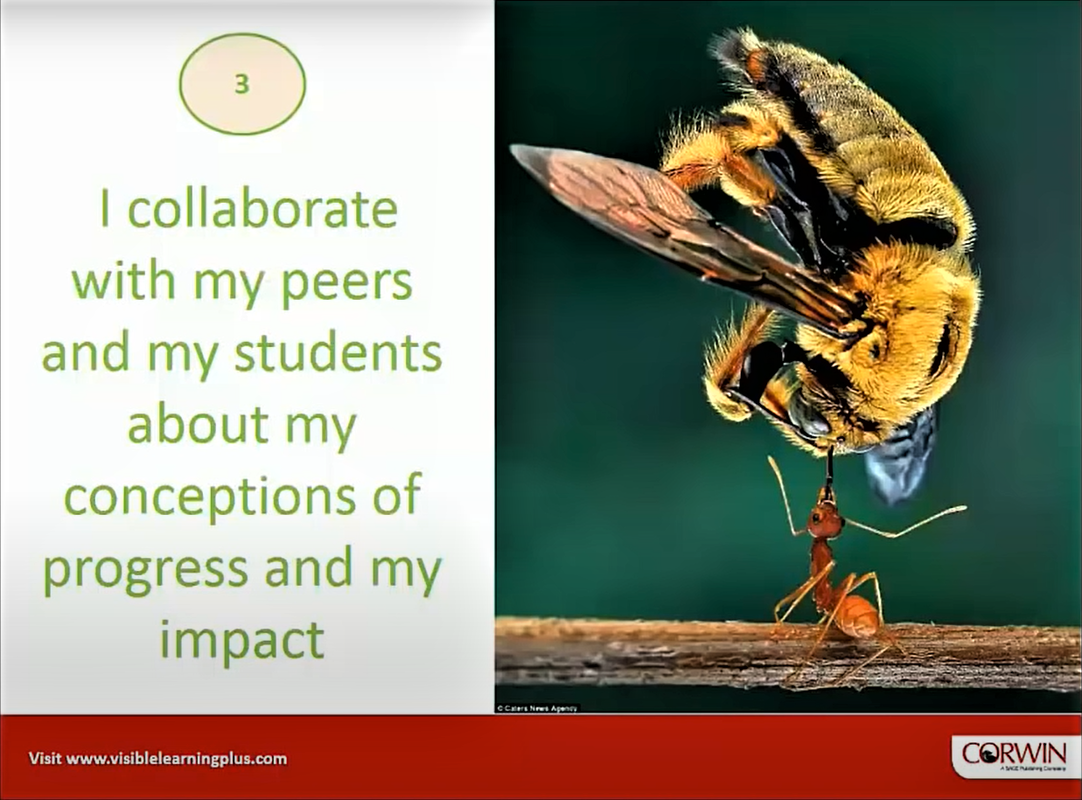
I collaborate with my peers and my students about my conceptions of progress and my impact
  • ​Educational expertise is a product of exchange and cooperation
  • important for developing a sense of community amongst individuals
  • It is the collaborative nature of learning and professional development that makes a true impact.
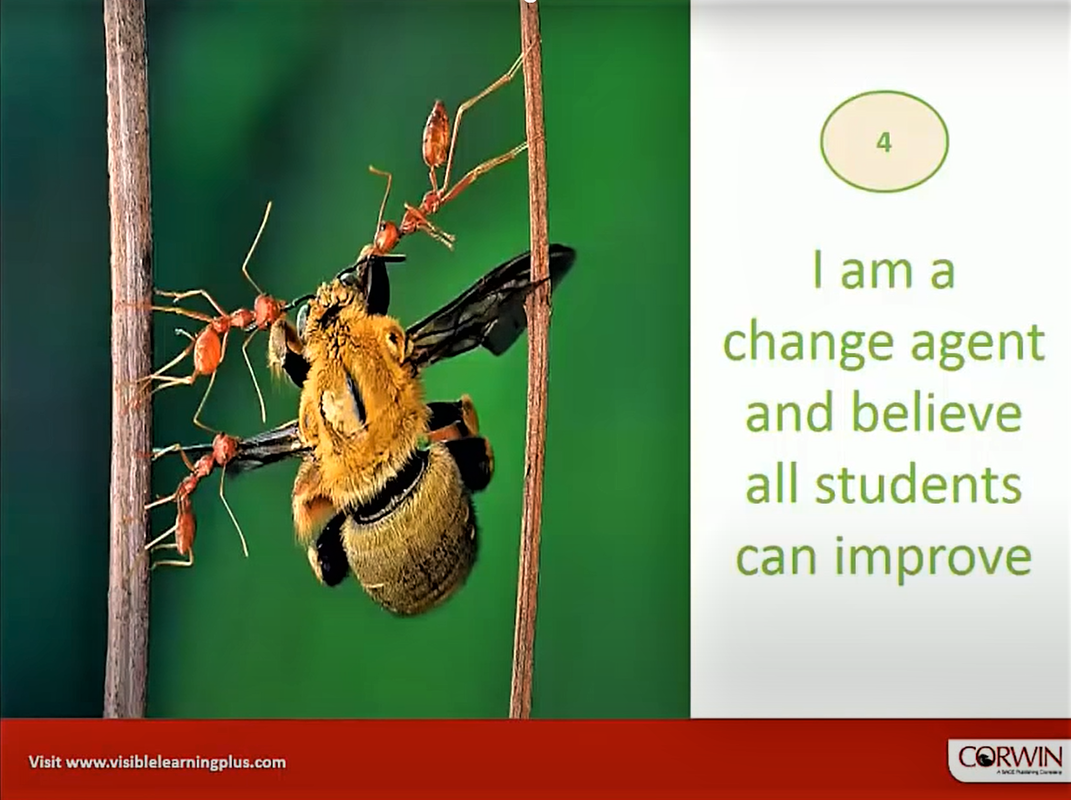
I am a change agent and believe all students can improve
  • Learning has a lot to do with perspectives, particularly the perspective of the teacher​, the parent and the learner themselves.
  • Successful learning requires targeted perspectives, and it is the responsibility of all those surrounding the learner to build up, support and develop positive perspectives. 
Picture
Picture
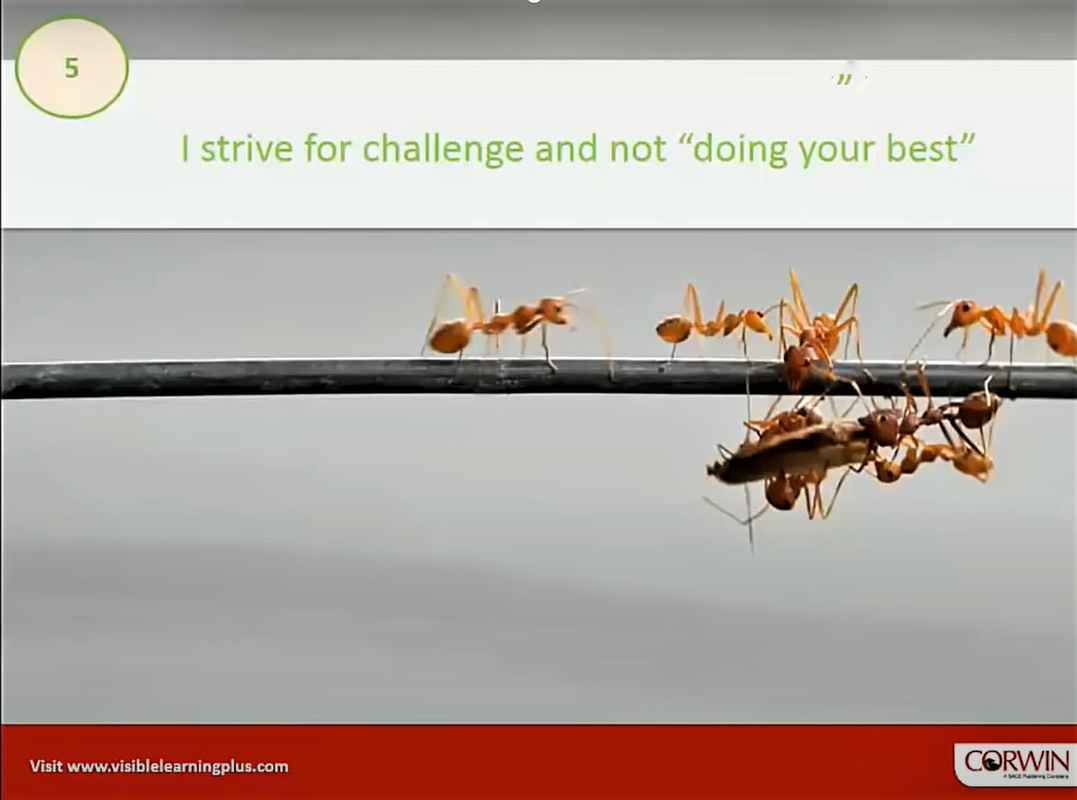
I strive for challenge and not "doing your best"
  • Learning needs to be challenging. It is the role of the teacher to ensure that this is neither too high or too low.
  • Clarity around goals and making them transparent in the lesson. Goals also need to be appropriately challenging, and provide many ways and opportunities to monitor progress from learner entry into the lesson towards the goals of the lesson. 
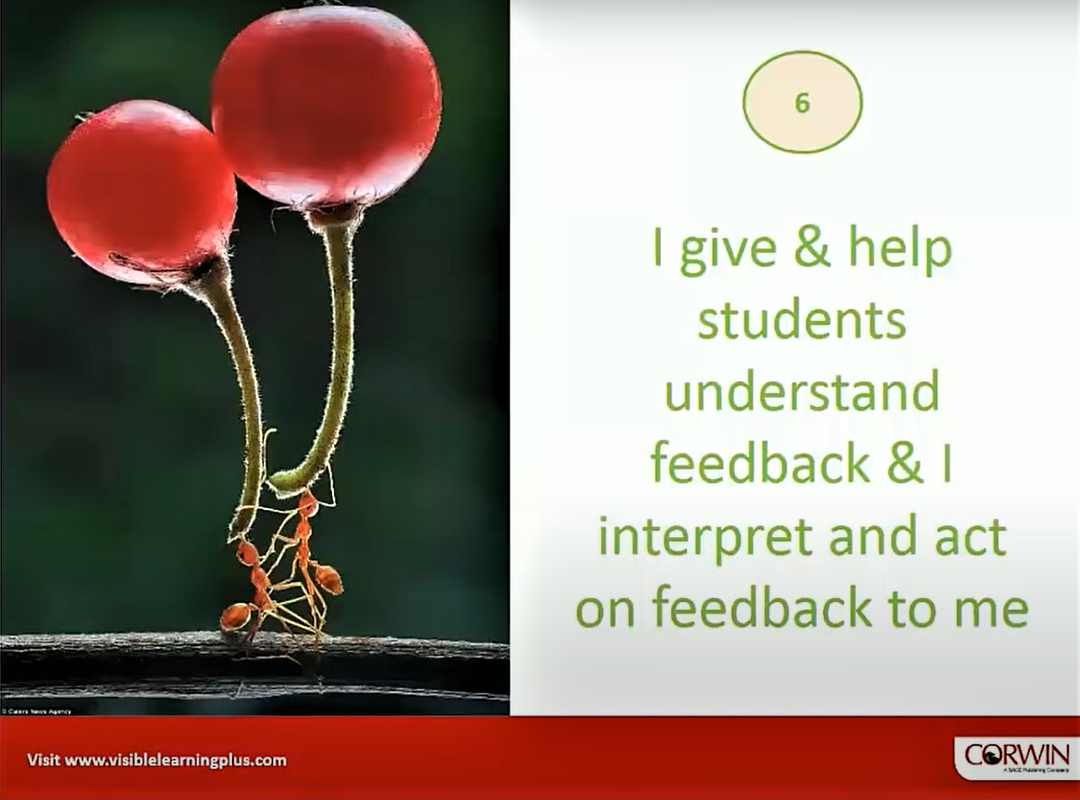
I give and help students understand feedback and I interpret and act on feedback to me
  • Learner feedback provides crucial information for teachers about whether learning and teaching has been successful.
  • Occurs within a dialogic process. 
  • Successful teachers give student timely and meaningful feedback on their learning progress and also seek and analyse feedback from students.
Picture
Picture
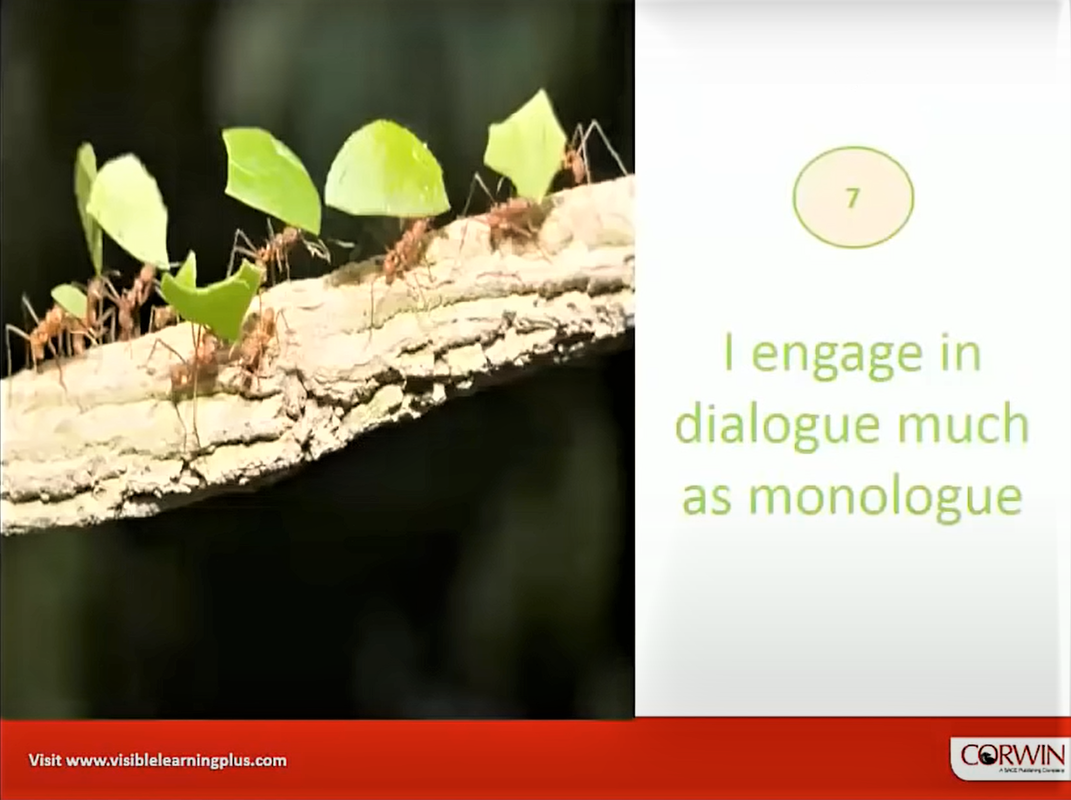
I engage in dialogue much as monologue
  • ​Involves exchanges with another person - learners, teachers or parents
  • Focus on getting the balance right between talking and explaining, and listening and privileging student discussion.
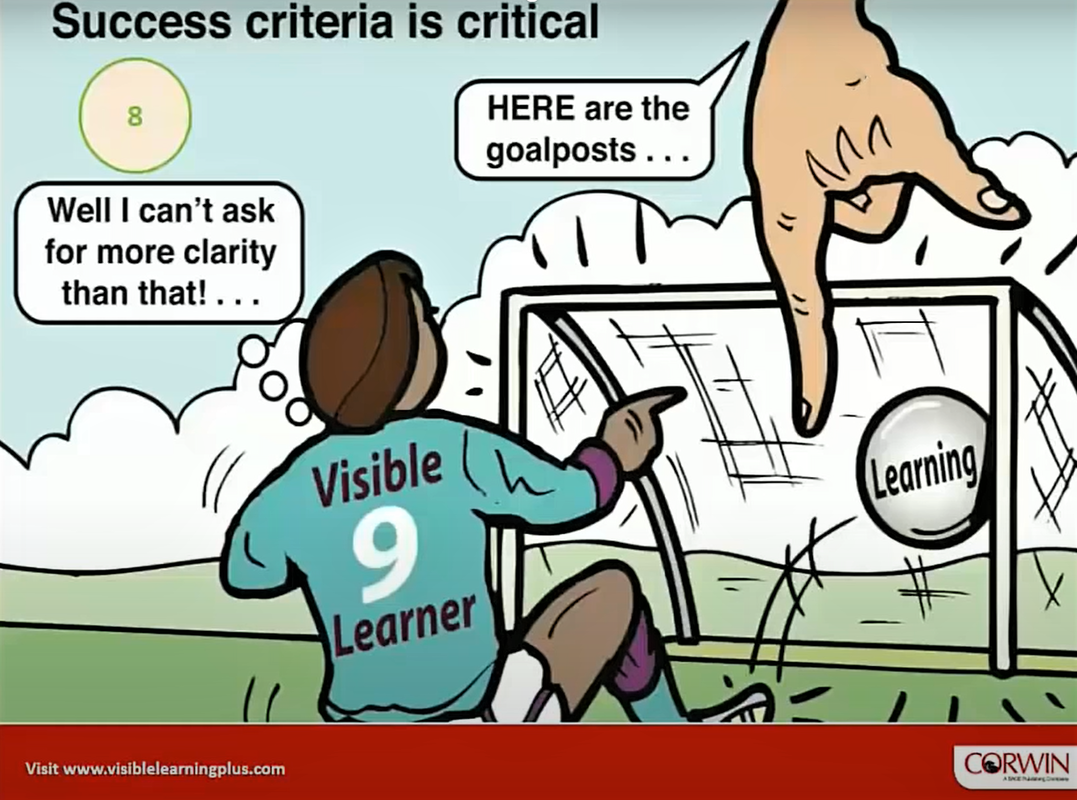
Success criteria is critical
  • Successful learning requires clarity - not only in the learning process but in view of the learning outcomes.
  • Using and demonstrating the success criteria to students linked to the goal of the lesson is more effective and proves to have a lasting impact on learners and what constitutes learning success. 
Picture
Picture
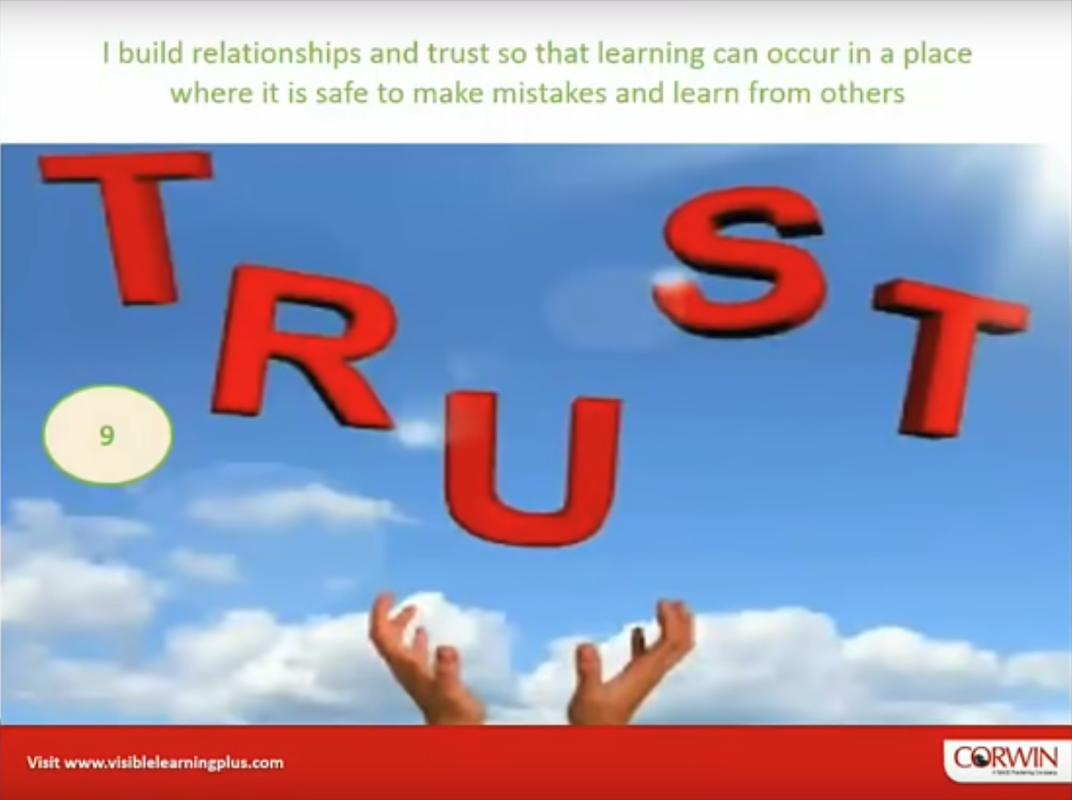
I build relationships and trust so that learning can occur in a place where it is safe to make mistakes and learn from others
  • Learning requires positive relationships.
  • Instructions is essentially built on relationships and the more safe and trusting these are, the more the child will learn. 
  • Developing high expectations for all​ students. 
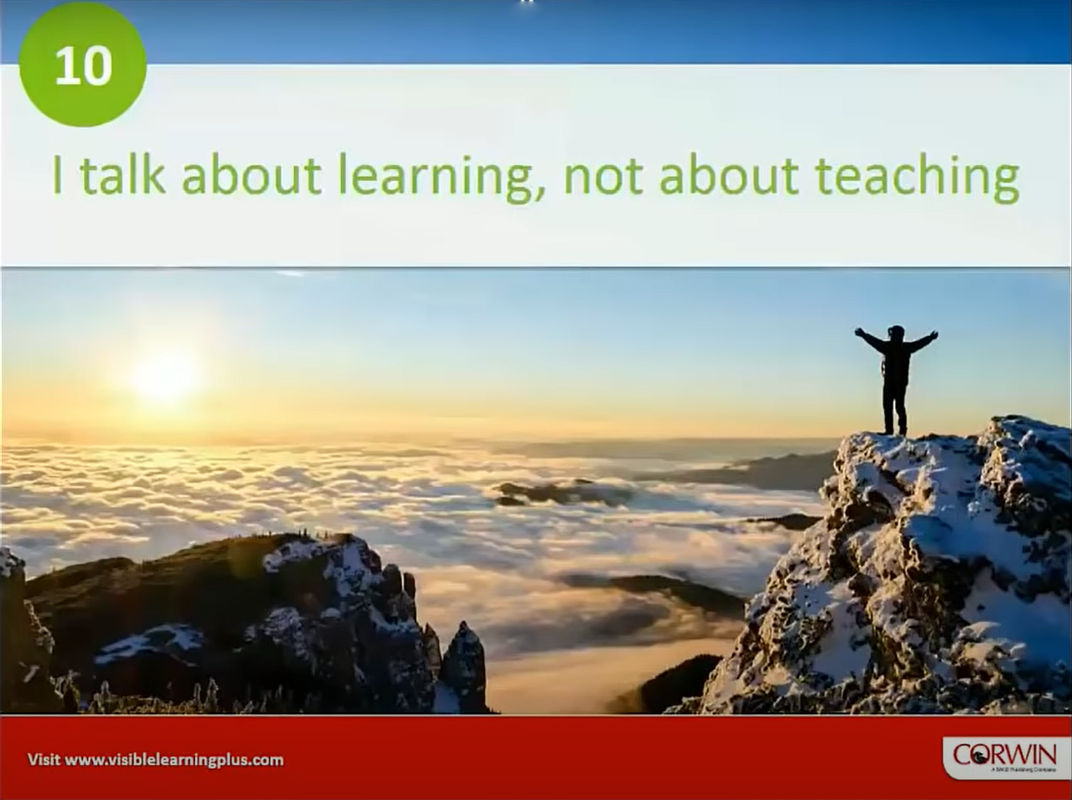
I talk about learning, not about teaching
  • We do not start from scratch when we learn something - we bring with us prior knowledge, skills and connections. Teachers need to be willing to take this as an initial starting point for instructional thought and action. 
  • Learning is an active and self-directed process.
Picture
View John Hattie's webinar on the 10 mindframes for visible learning from Corwin Press
Please note that these pages contain a collection of resources and links to activities to support and enhance classroom teaching and learning. The thumbnails and activities are the property of the authors/creators and available due to their generosity in sharing their work. All sources are acknowledged on the ACKNOWLEDGEMENT OF SOURCES page.
This website contains NSW syllabus content prepared by the NSW Education Standards Authority for and on behalf of the State of New South Wales which is protected by Crown copyright.
https://www.educationstandards.nsw.edu.au/wps/portal/nesa/home 
​
This work is licensed under a Creative Commons Attribution-NonCommercial-ShareAlike 4.0 International License.
Picture
  • Home
  • Educational Resources
    • Thinking Routines >
      • Routines for Introducing & Exploring Ideas >
        • See Think Wonder
        • Think Puzzle Explore
        • Chalk Talk
        • Zoom In
        • 3 2 1 Bridge
        • Compass Points
        • The Explanation Game
        • Hot Spots
      • Routines for Synthesising & Organising Ideas >
        • Connect Extend Challenge
        • Colour Symbol Image
        • Headlines
        • I used to think...Now I Think
        • Generate Sort Connect Elaborate
        • The 4C's
        • The Microlab Protocol
        • E3
      • Routines for Digging Deeper into Ideas >
        • What Makes You Say That?
        • Circle of Viewpoints
        • Step Inside
        • Red Light Yellow Light
        • Claim Support Question
        • Tug-Of-War
        • Sentence Phrase Word
        • Peel The Fruit
        • Question Starts
        • Main Side Hidden
        • Layered Inference
      • Routines for Giving Feedback >
        • Give 3
        • Ladder of Feedback **NEW**
        • SAIL: Share Ask Ideas Learned **NEW**
      • Routines for Self Reflection >
        • Pause Points **NEW**
        • Success Criteria Strips **NEW**
        • Exit Ticket Questions
        • Traffic Light Reflection
        • Show of Thumbs Reflection
        • 3 2 1 Reflection
        • 4-Square Criterion Reflection
      • Routines for Engaging With Others **NEW** >
        • Give One Get One
        • +1
        • Think Talk Open Exchange
        • The Leaderless Discussion **NEW**
        • Making Meaning **NEW**
    • Cultures of Thinking >
      • Our Journey
      • Uncovering Student's Thinking
      • Building Understanding
      • 8 Cultural Forces >
        • Time
        • Routines
        • Language
        • Modeling
        • Opportunities
        • Interactions
        • Environment
        • Expectations
    • Inquiry-Based Learning >
      • Unpacking the Cycle of Inquiry **NEW**
      • The Art of Questioning **NEW**
      • Planning An Inqury Unit **NEW**
      • Genius Hour
    • Visible Learning >
      • Learning Intentions
      • Success Criteria
      • Feedback
      • 10 Mindframes for Visible Learning
    • Units of Work >
      • English >
        • Reading Resources >
          • Reading Conferences
          • Book Club
          • Visual Literacy
          • Book Review
        • Spelling Resources >
          • Spelling Through Inquiry
        • Grammar & Punctuation Resources
      • Mathematics >
        • Number & Algebra
        • Measurement & Geometry
        • Statistics & Probability
      • Science & Technology >
        • Earth and Space >
          • ES: Early Stage 1
          • ES: Stage 1
          • ES: Stage 2
          • ES: Stage 3
        • Material World >
          • MW: Stage 1
          • MW: Stage 2
          • MW: Stage 3
        • Living World >
          • LW: Early Stage 1
          • LW: Stage 1
          • LW: Stage 2
          • LW: Stage 3
        • Physical World >
          • PW: Stage Two
        • Digital Technologies >
          • DT: Stage 1
          • DT: Stage 2
          • DT: Stage 3
      • Geography >
        • S1: People and Places
        • S3: Factors That Shape Places
        • S3: A Diverse and Connected World
      • History >
        • The Australian Colonies
        • Australia As A Nation
      • Personal Development, Health & Physical Education >
        • PDHPE: YEAR 5
      • Other KLA's >
        • Creative Arts
        • ICT >
          • Google Apps For Education
  • Blog
  • SPEAKER
  • Podcasts
    • Teacher Takeaway Podcast
  • Books
    • The Thinking Classroom >
      • TTC Exclusive Content
    • The Learning Classroom >
      • TLC Exclusive Content
  • Shop
  • Courses
  • Contact
    • Acknowledgement of Sources