THINKING PATHWAYS
  • Home
  • Educational Resources
    • Thinking Routines >
      • Routines for Introducing & Exploring Ideas >
        • See Think Wonder
        • Think Puzzle Explore
        • Chalk Talk
        • Zoom In
        • 3 2 1 Bridge
        • Compass Points
        • The Explanation Game
        • Hot Spots
      • Routines for Synthesising & Organising Ideas >
        • Connect Extend Challenge
        • Colour Symbol Image
        • Headlines
        • I used to think...Now I Think
        • Generate Sort Connect Elaborate
        • The 4C's
        • The Microlab Protocol
        • E3
      • Routines for Digging Deeper into Ideas >
        • What Makes You Say That?
        • Circle of Viewpoints
        • Step Inside
        • Red Light Yellow Light
        • Claim Support Question
        • Tug-Of-War
        • Sentence Phrase Word
        • Peel The Fruit
        • Question Starts
        • Main Side Hidden
        • Layered Inference
      • Routines for Giving Feedback >
        • Give 3
        • Ladder of Feedback **NEW**
        • SAIL: Share Ask Ideas Learned **NEW**
      • Routines for Self Reflection >
        • Pause Points **NEW**
        • Success Criteria Strips **NEW**
        • Exit Ticket Questions
        • Traffic Light Reflection
        • Show of Thumbs Reflection
        • 3 2 1 Reflection
        • 4-Square Criterion Reflection
      • Routines for Engaging With Others **NEW** >
        • Give One Get One
        • +1
        • Think Talk Open Exchange
        • The Leaderless Discussion **NEW**
        • Making Meaning **NEW**
    • Cultures of Thinking >
      • Our Journey
      • Uncovering Student's Thinking
      • Building Understanding
      • 8 Cultural Forces >
        • Time
        • Routines
        • Language
        • Modeling
        • Opportunities
        • Interactions
        • Environment
        • Expectations
    • Inquiry-Based Learning >
      • Unpacking the Cycle of Inquiry **NEW**
      • The Art of Questioning **NEW**
      • Planning An Inqury Unit **NEW**
      • Genius Hour
    • Visible Learning >
      • Learning Intentions
      • Success Criteria
      • Feedback
      • 10 Mindframes for Visible Learning
    • Units of Work >
      • English >
        • Reading Resources >
          • Reading Conferences
          • Book Club
          • Visual Literacy
          • Book Review
        • Spelling Resources >
          • Spelling Through Inquiry
        • Grammar & Punctuation Resources
      • Mathematics >
        • Number & Algebra
        • Measurement & Geometry
        • Statistics & Probability
      • Science & Technology >
        • Earth and Space >
          • ES: Early Stage 1
          • ES: Stage 1
          • ES: Stage 2
          • ES: Stage 3
        • Material World >
          • MW: Stage 1
          • MW: Stage 2
          • MW: Stage 3
        • Living World >
          • LW: Early Stage 1
          • LW: Stage 1
          • LW: Stage 2
          • LW: Stage 3
        • Physical World >
          • PW: Stage Two
        • Digital Technologies >
          • DT: Stage 1
          • DT: Stage 2
          • DT: Stage 3
      • Geography >
        • S1: People and Places
        • S3: Factors That Shape Places
        • S3: A Diverse and Connected World
      • History >
        • The Australian Colonies
        • Australia As A Nation
      • Personal Development, Health & Physical Education >
        • PDHPE: YEAR 5
      • Other KLA's >
        • Creative Arts
        • ICT >
          • Google Apps For Education
  • Blog
  • SPEAKER
  • Podcasts
    • Teacher Takeaway Podcast
  • Books
    • The Thinking Classroom >
      • TTC Exclusive Content
    • The Learning Classroom >
      • TLC Exclusive Content
  • Shop
  • Courses
  • Contact
    • Acknowledgement of Sources

Thinking Pathways Blog

Reflecting on Learning Using Thinking Routines

8/5/2018

4 Comments

 
Picture
Thinking routines are a great way to help students and teachers name, notice and develop their thinking dispositions (see Project Zero website). Learning is a consequence of thinking but how often do we really take the time to reflect on our learning and the journey we took to know and understand the things we have learnt. 

When we ask students to reflect, how many of them would actually know what that means? 
How many students in our classrooms know what effective reflection looks like? 
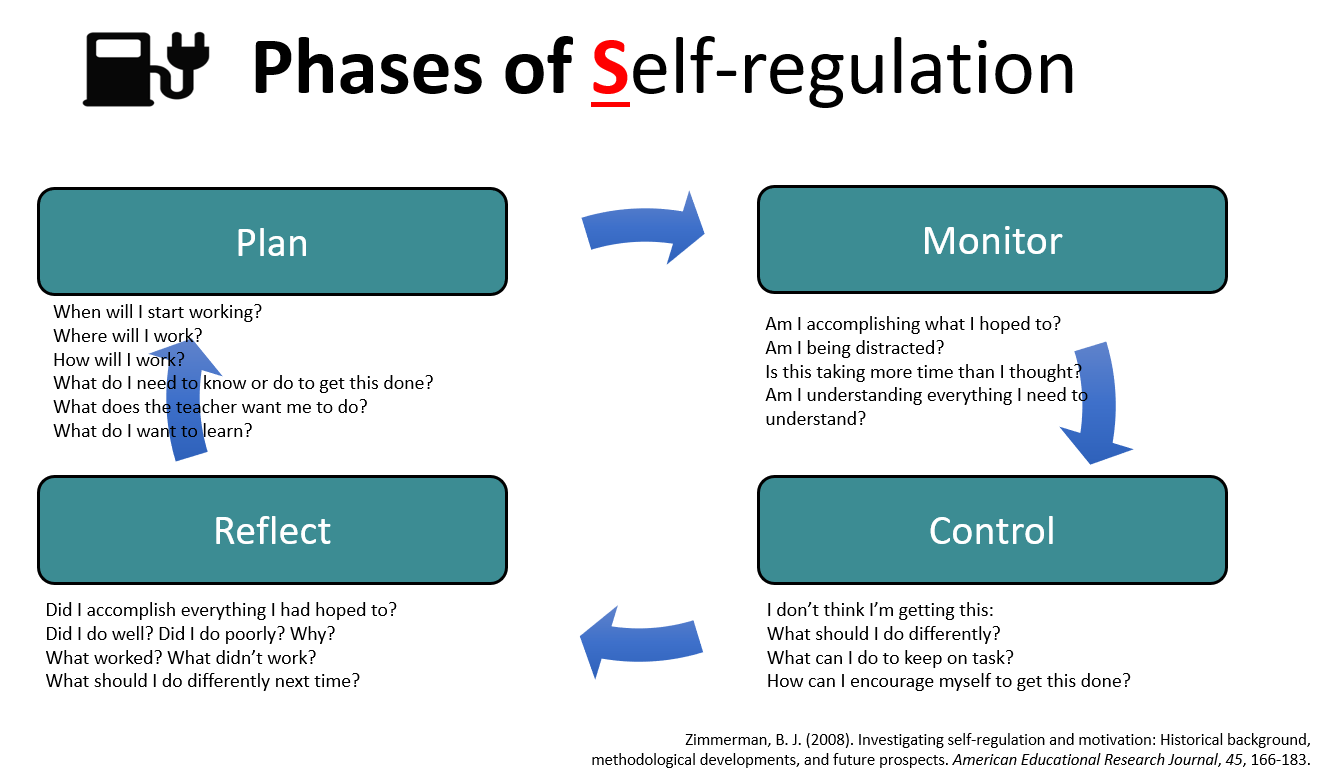
To reflect means to think deeply and carefully about something. When we ask students to reflect on the learning process, they strengthen their own capacity to learn. Central to this is metacognition and self-regulation, where students are aware of and can describe their thinking in a way that allows them to 'close the gap' as it were between what they know and what they need to learn.  
We do not learn from experience...we learn from reflecting on experience.
-John Dewey
Just as we strategically scaffold the different types of thinking we want students to use when engaging with a learning experience, so to do we need to do this when helping students reflect on their learning. 

Reflection can be done in a variety of ways and at various points in the learning journey. It needs to serve a purpose and hold value for it to be effective at that point in time. 
Picture
One of the thinking routines we can use to aid student reflection on learning is I used to think... Now I think... (click link). This routine is perfect for helping students to
  • reflect on their learning,
  • make connections to their prior knowledge,
  • explore how their thinking has changed over the learning journey and, 
  • talk about and make their thinking visible to others.
In the initial phases of development this is highly structured, but as the routine is used on a regular basis across all Key Learning Areas the students are able to use it  and apply it seamlessly.

I used to think...

  • This prompt is an important part of the reflective process. 
  • It asks students to look back at their past or initial thinking about a topic/ concept/ idea etc. ​​
  • We often just list previous key ideas or understandings we have held.
  • As we share our thinking either in learning pods, as a class or individually with the teacher, I am always keen to find out what made them think this. 
  • This open conversation alone brings about rich discussions.

Now I think...

  • This prompt asks learners to think about and examine how their thinking has evolved over the learning process. 
  • I often ask students to elaborate on this response by adding 'because' or asking them how and/or why they know and understand this. This allows students to practice their ability to elaborate on their thinking and provide evidence to support their thinking.

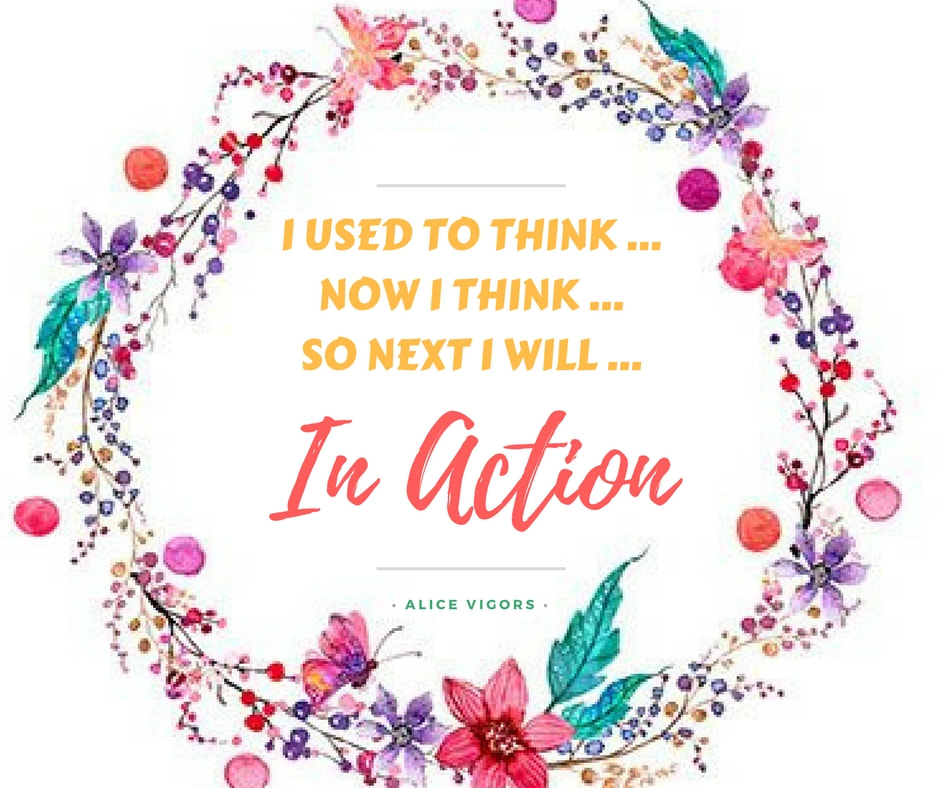
Recently I went to a conference in Sydney where the keynote speaker was Rhonda Bondie (see website). She talked about the value of this routine in helping students to reflect on their learning, however she added that in order to help learners become self-regulated they need to continue the cycle beyond reflection. She suggested the prompt 'So next I will...' as a way to help students think about their next steps in the learning journey. 
Picture
Click to view larger image

So next I will...

  • This prompt allows students to forward plan and set learning goals as they move forward in the learning process, thus continuing the cycle of self-regulation. 
  • It also provides valuable insight to educators as to who has the ability to recognise their strengths and areas of improvement and who still needs to develop these skills. 

Discussion Prompts:
  • What role does reflection play in your classroom?
  • How do/ might you scaffold student reflection?
  • What have you noticed when using this thinking routine with students?

Picture
- Alice Vigors
4 Comments
John Stewart
19/12/2018 03:55:02 am

I use to think that I had to plan and follow my lesson as it was written. Now I think it is important for the lesson and the direction the lesson goes is dependent on the students and where they as a class want to take the lesson.

Reply
Alice Vigors
19/12/2018 07:58:04 am

Yes John.
When we allow student voice, thinking and wonderings to guide learning we signal to students that their thinking matters and is what is used to guide learning in the classroom. This helps to lay the groundwork for life-long learning.

I'm interested to hear how this shift in thinking will impact on the way you program and teach your students.

Seasons Greetings,
Alice

Reply
Paula Huisken Caron
8/1/2019 05:38:03 am

I've found that depending on the class, some activities may or may not be useful. Such as a co-taught EL class which lends itself to students sharing about their experiences as recent immigrants to Maple Grove as a group of students answering question as a panel. The questions are written by the class after careful thought and reflection on the many types of migration and some more well-known immigrant stories that they read about during this unit.

Reply
Aishah Mohd Noor
30/12/2018 01:30:53 pm

Thank you for sharing. I am preparing my documents for Thinking Routine activities in Statistics Classroom (Higher Education). With a different culture (Malaysia, exam-oriented, not used to think aloud during schools), I still need to prepare the instructions for the routines. I had few experiences without a good structure. Thanks again and keep sharing.

Reply


Leave a Reply.

    Author

    Hi, I am Alice. ​I am a primary teacher and leader in New South Wales, Australia. I have been teaching for the past 14 years in both the Public and Catholic school systems. I am passionate about supporting and mentoring colleagues to think deeply about their efforts to cultivate thinking and learning opportunities for students. Read more

    Picture

    Archives

    May 2026
    August 2023
    July 2023
    March 2023
    January 2023
    January 2022
    January 2020
    April 2019
    November 2018
    September 2018
    August 2018
    July 2018
    June 2018
    May 2018
    April 2018
    March 2018
    February 2018
    February 2017
    November 2016
    October 2016
    September 2016

    Categories

    All
    Alice Vigors
    Assessment As Learning
    Beginning Of The Year Routines
    Building Culture Series
    Classroom Environment
    Classroom Expectations
    Critical And Creative Thinking
    Cultures Of Thinking
    Differentiation
    Educational Leadership
    Feedback
    Google Apps For Education
    Imaginative Writing
    #IMMOOC
    Innovator's Mindset
    Inquiry Learning
    Journey
    Learner Centered Innovation
    Learning Conferences
    Learning Intentions & Success Criteria
    Measuring Thinking
    Professional Development
    Reflection
    Reflection Routines
    Self Reflective Learners
    Technology
    The Thinking Classroom
    Thinking Pathways
    Thinking Pathways Podcast
    Thinking Routines
    Visible Learning

    RSS Feed

Please note that these pages contain a collection of resources and links to activities to support and enhance classroom teaching and learning. The thumbnails and activities are the property of the authors/creators and available due to their generosity in sharing their work. All sources are acknowledged on the ACKNOWLEDGEMENT OF SOURCES page.
This website contains NSW syllabus content prepared by the NSW Education Standards Authority for and on behalf of the State of New South Wales which is protected by Crown copyright.
https://www.educationstandards.nsw.edu.au/wps/portal/nesa/home 
​
This work is licensed under a Creative Commons Attribution-NonCommercial-ShareAlike 4.0 International License.
Picture
  • Home
  • Educational Resources
    • Thinking Routines >
      • Routines for Introducing & Exploring Ideas >
        • See Think Wonder
        • Think Puzzle Explore
        • Chalk Talk
        • Zoom In
        • 3 2 1 Bridge
        • Compass Points
        • The Explanation Game
        • Hot Spots
      • Routines for Synthesising & Organising Ideas >
        • Connect Extend Challenge
        • Colour Symbol Image
        • Headlines
        • I used to think...Now I Think
        • Generate Sort Connect Elaborate
        • The 4C's
        • The Microlab Protocol
        • E3
      • Routines for Digging Deeper into Ideas >
        • What Makes You Say That?
        • Circle of Viewpoints
        • Step Inside
        • Red Light Yellow Light
        • Claim Support Question
        • Tug-Of-War
        • Sentence Phrase Word
        • Peel The Fruit
        • Question Starts
        • Main Side Hidden
        • Layered Inference
      • Routines for Giving Feedback >
        • Give 3
        • Ladder of Feedback **NEW**
        • SAIL: Share Ask Ideas Learned **NEW**
      • Routines for Self Reflection >
        • Pause Points **NEW**
        • Success Criteria Strips **NEW**
        • Exit Ticket Questions
        • Traffic Light Reflection
        • Show of Thumbs Reflection
        • 3 2 1 Reflection
        • 4-Square Criterion Reflection
      • Routines for Engaging With Others **NEW** >
        • Give One Get One
        • +1
        • Think Talk Open Exchange
        • The Leaderless Discussion **NEW**
        • Making Meaning **NEW**
    • Cultures of Thinking >
      • Our Journey
      • Uncovering Student's Thinking
      • Building Understanding
      • 8 Cultural Forces >
        • Time
        • Routines
        • Language
        • Modeling
        • Opportunities
        • Interactions
        • Environment
        • Expectations
    • Inquiry-Based Learning >
      • Unpacking the Cycle of Inquiry **NEW**
      • The Art of Questioning **NEW**
      • Planning An Inqury Unit **NEW**
      • Genius Hour
    • Visible Learning >
      • Learning Intentions
      • Success Criteria
      • Feedback
      • 10 Mindframes for Visible Learning
    • Units of Work >
      • English >
        • Reading Resources >
          • Reading Conferences
          • Book Club
          • Visual Literacy
          • Book Review
        • Spelling Resources >
          • Spelling Through Inquiry
        • Grammar & Punctuation Resources
      • Mathematics >
        • Number & Algebra
        • Measurement & Geometry
        • Statistics & Probability
      • Science & Technology >
        • Earth and Space >
          • ES: Early Stage 1
          • ES: Stage 1
          • ES: Stage 2
          • ES: Stage 3
        • Material World >
          • MW: Stage 1
          • MW: Stage 2
          • MW: Stage 3
        • Living World >
          • LW: Early Stage 1
          • LW: Stage 1
          • LW: Stage 2
          • LW: Stage 3
        • Physical World >
          • PW: Stage Two
        • Digital Technologies >
          • DT: Stage 1
          • DT: Stage 2
          • DT: Stage 3
      • Geography >
        • S1: People and Places
        • S3: Factors That Shape Places
        • S3: A Diverse and Connected World
      • History >
        • The Australian Colonies
        • Australia As A Nation
      • Personal Development, Health & Physical Education >
        • PDHPE: YEAR 5
      • Other KLA's >
        • Creative Arts
        • ICT >
          • Google Apps For Education
  • Blog
  • SPEAKER
  • Podcasts
    • Teacher Takeaway Podcast
  • Books
    • The Thinking Classroom >
      • TTC Exclusive Content
    • The Learning Classroom >
      • TLC Exclusive Content
  • Shop
  • Courses
  • Contact
    • Acknowledgement of Sources